Jetonikeramika
- Industry
- Ceramics &
Tiles - Service
- Research · Product Design ·
Development · Analytics - Agency
- Mardal
- Location
- Kosovo
- Stack
- Figma · WordPress (custom theme) · PHP · JavaScript ES6+ · Intersection Observer API · Google Analytics 4
Company
2,500 m² of showroom
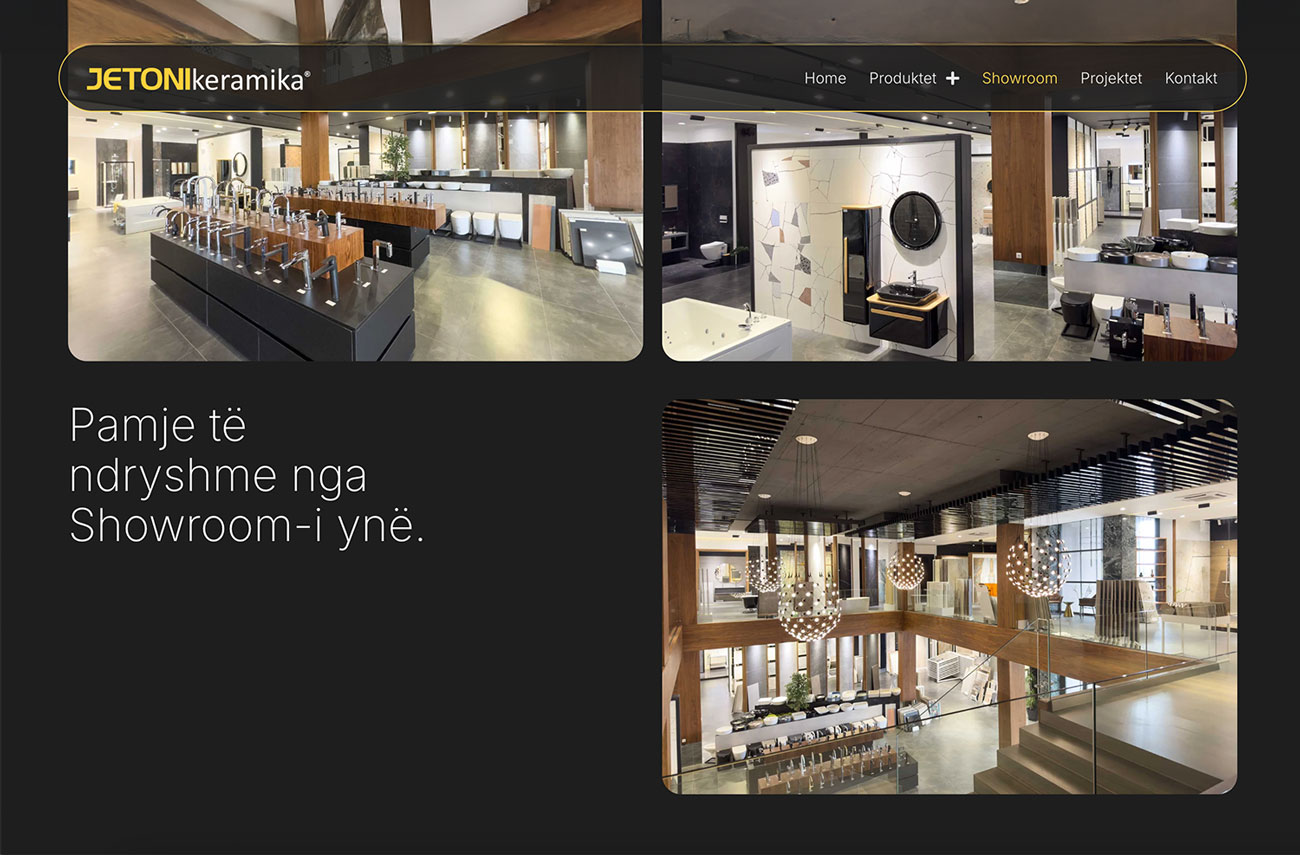
Jetonikeramika's business happens in a 2,500 m² showroom, where customers see, touch and choose premium ceramics and tiles for bathrooms and living spaces. It sells to private clients and contractors alike. Mardal brought the project to me in 2026, and I led the research, design and build.
The problem
A company with a clear philosophy and no way to show it online
Building Jetonikeramika's first website raised a question before any design did: what was it for? A high-end ceramics brand could easily become an online catalogue competing on product specs, but that isn't how this company sells. The site had to express its philosophy, the brands it carries and the range it offers, in a way that matched what a customer feels on arrival at the showroom.
Research
The sale happens in the showroom
I researched how ceramics and interior brands present themselves in the Kosovo market, and asked the client how their customers get from first hearing of the brand to buying.
The answer was clear. Sales are made in person at the showroom, with advertising bringing people in, and none of them happen online. So a visitor to the website is not yet a buyer. They are someone deciding whether the showroom is worth the trip.
Solution
Designed to earn a visit
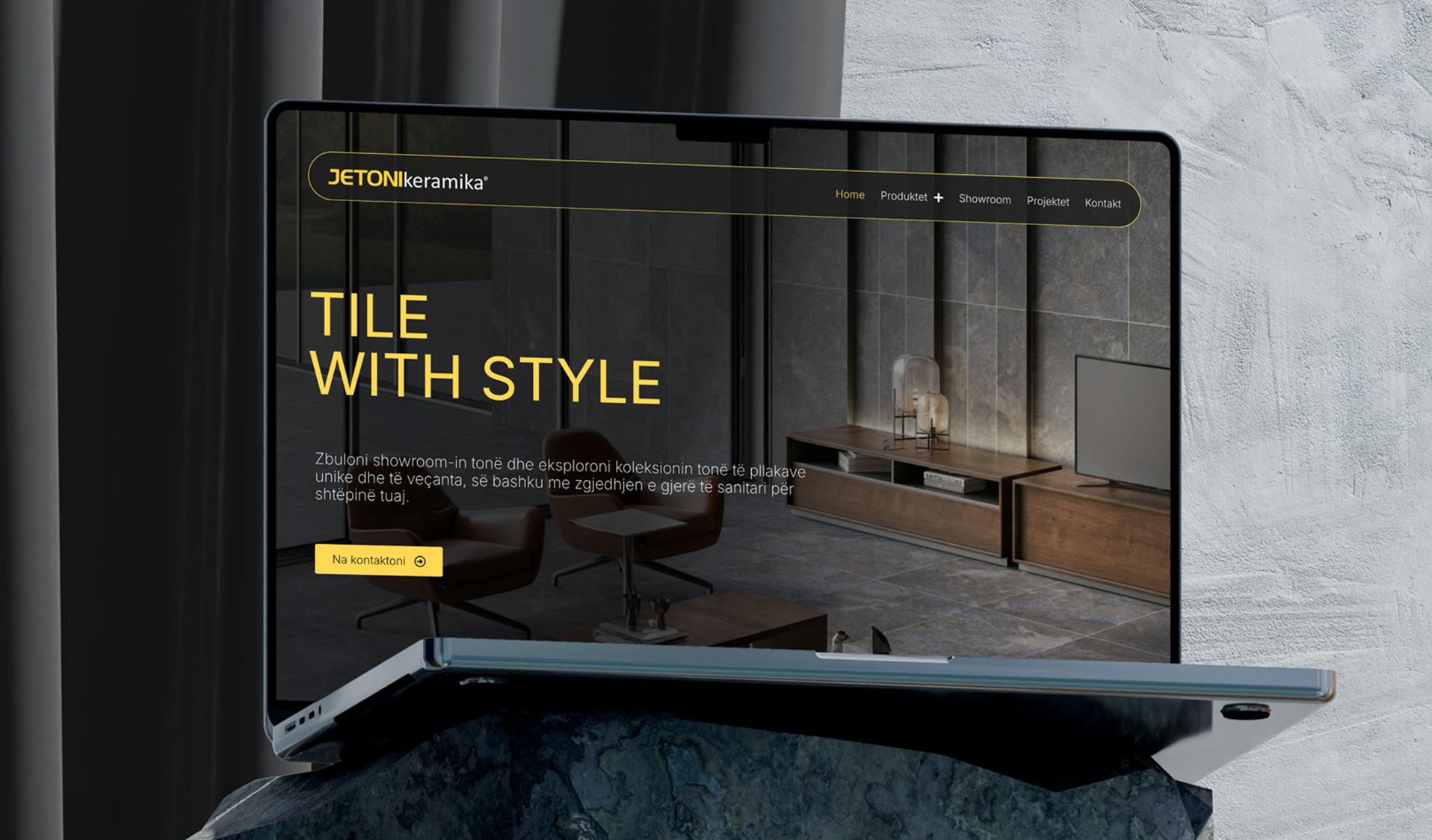
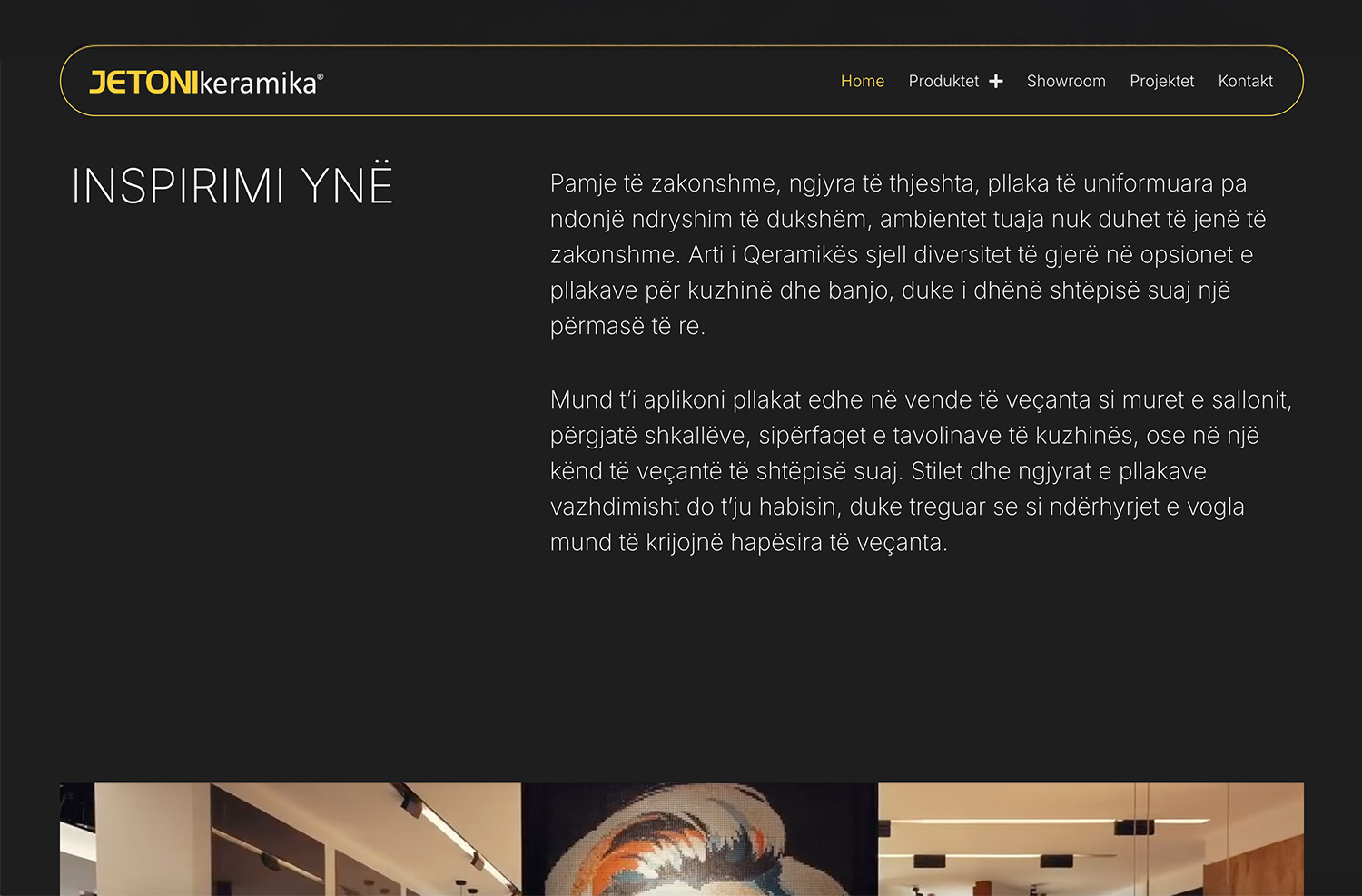
The philosophy leads. The homepage opens with what the company stands for, not a product grid. For a brand competing on quality rather than price, that story is the reason to choose it.
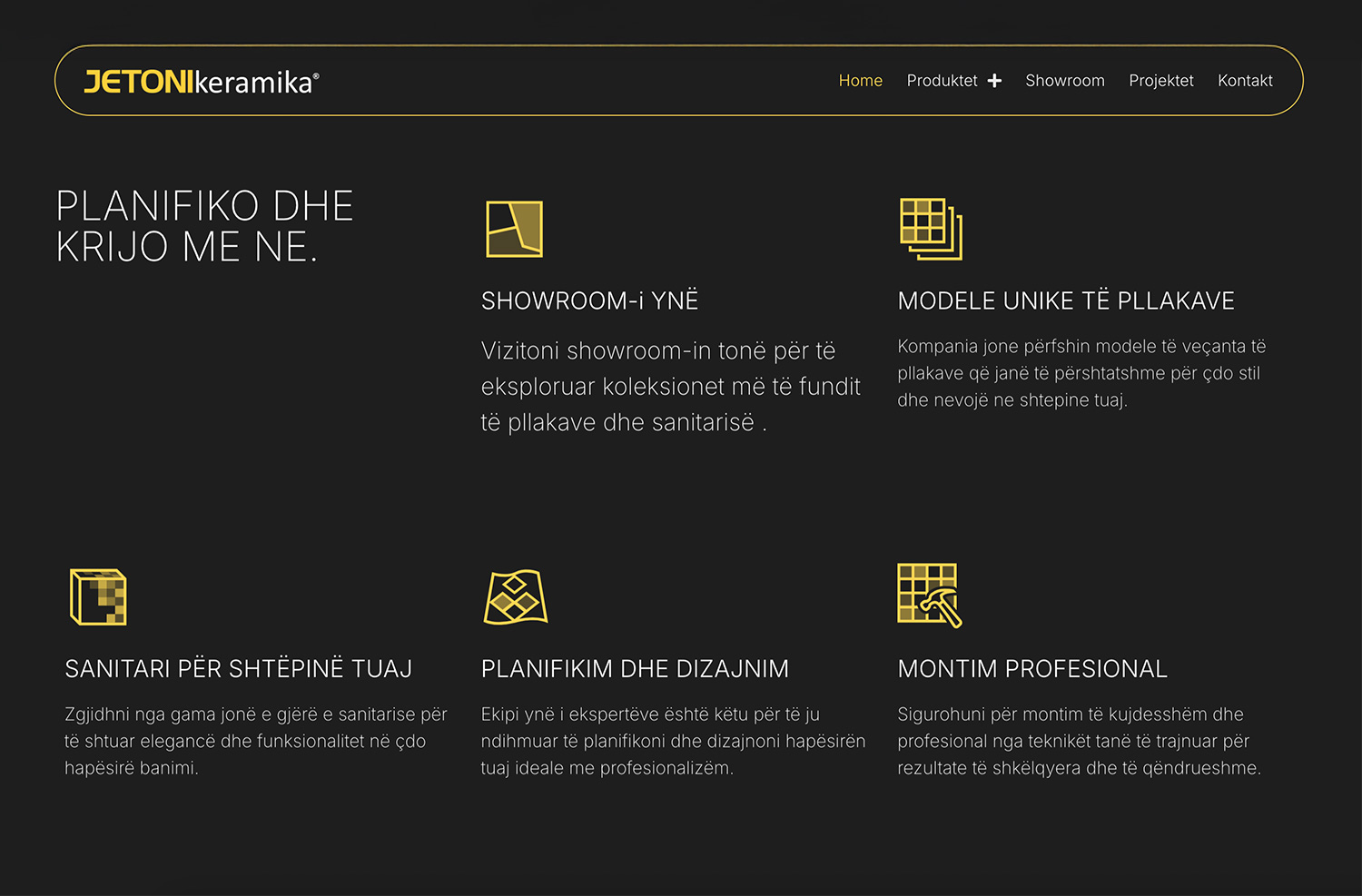
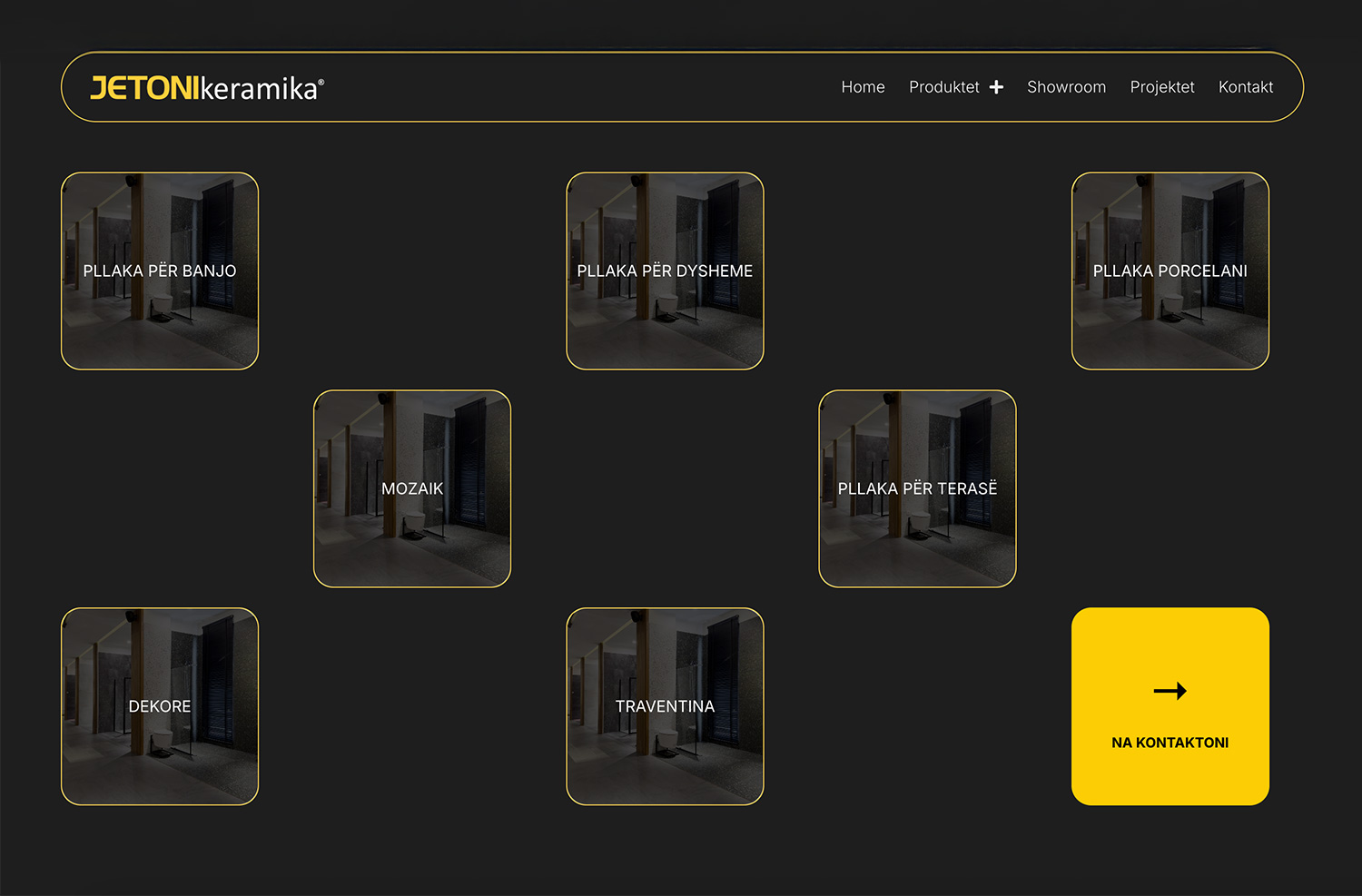
The catalogue informs the visit. Brands and ranges are presented so visitors can understand the breadth of what's available and arrive at the showroom already knowing what interests them. The final choice is made in person, under real light, with the product in hand.
The showroom is the call to action. Where another site would push a Buy button, this one points to the showroom: where it is, when it's open and how to get there. That trip is the outcome the whole site is built around.
Design
A dark stage for the product
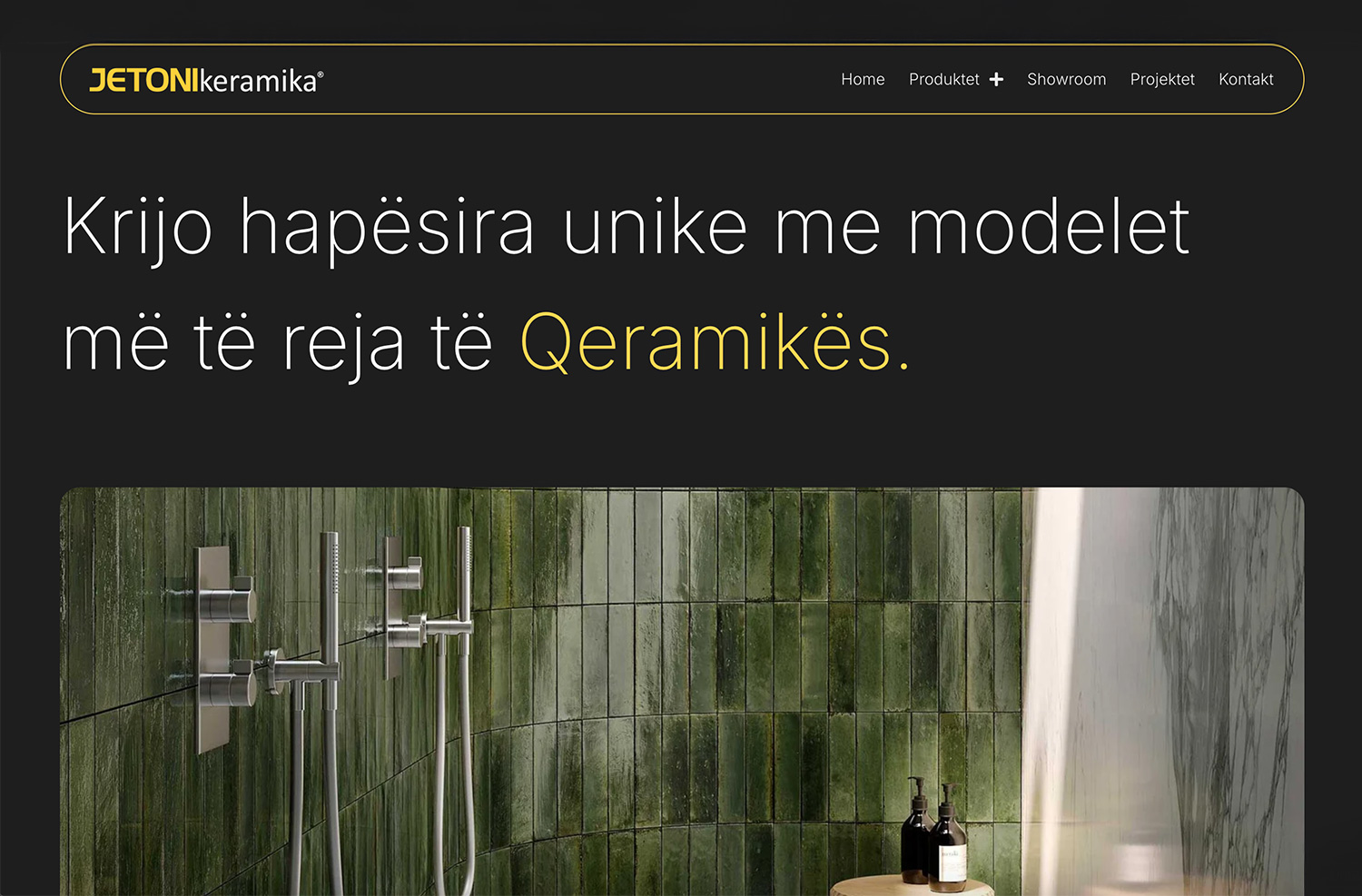
The palette comes straight from the brand: a dark ground, white type, and yellow drawn from the logo. Dark was the client's choice for a premium feel, and it does real work on the page. On a dark interface the brightest element on screen is seen first, and here that is always the product photography, so every tile and surface becomes the natural focal point without any help from the layout.
Dark backgrounds also make colours look richer than they will under ordinary light. For most catalogues that would be a problem. For a site whose job ends at the showroom door, it is a trade-off worth taking: the screen sets the mood, and the showroom settles the detail.
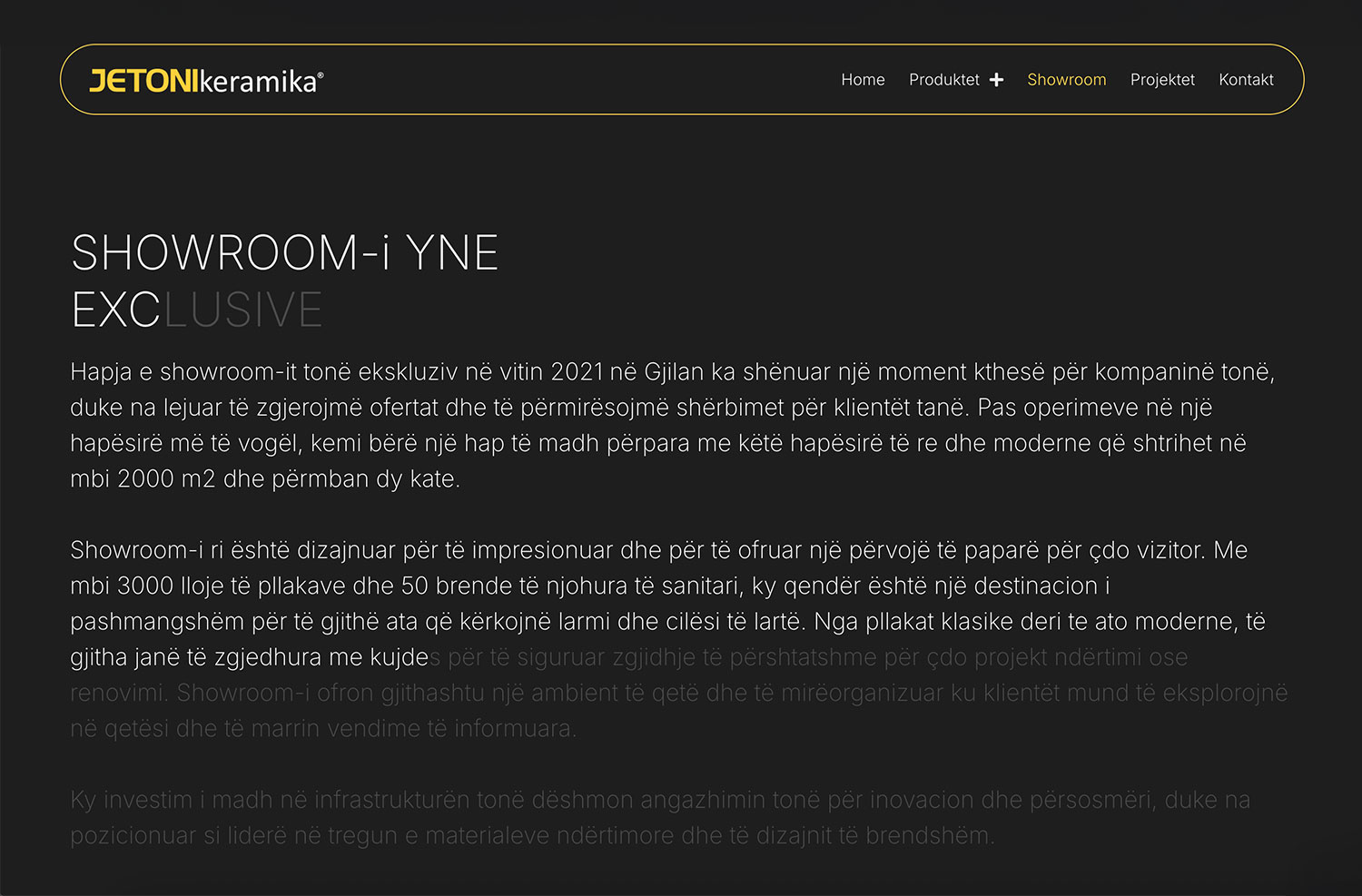
Yellow is used sparingly, as a signature rather than a highlight, so it stays recognisably Jetonikeramika's colour. White type is set large and body copy is kept brief, because long passages of light text on a dark ground tire the reader quickly.
Motion paces the story. Sections reveal themselves as they scroll into view, so the site unfolds one idea at a time, the way a printed brand book turns page by page. Once a section has arrived, it stays still, which keeps the rhythm without getting in the way of reading.
Development
Motion without the cost
Scroll animation is usually where a site gets slow, so the reveals are driven by the Intersection Observer API in plain JavaScript: an element animates when it enters the viewport, and the browser does the watching instead of a script reacting to every scroll. The large photography that carries the brand is where the page weight lives, so motion had to add as little as possible on top. Google Analytics 4 went in on launch day, which is the only reason the growth in monthly views can be shown at all.
Outcome
Five times the monthly traffic, and still growing
Monthly views have grown from around 100 after launch to more than 500. The numbers are still modest, and the trend is what matters: traffic has kept climbing since launch.